Everything You Need to Plan the Perfect Conservatory
Styles, materials, glazing, planning and the questions worth asking. A clear, jargon-free guide from a team that has been building light-filled spaces across the Midlands for over 40 years.
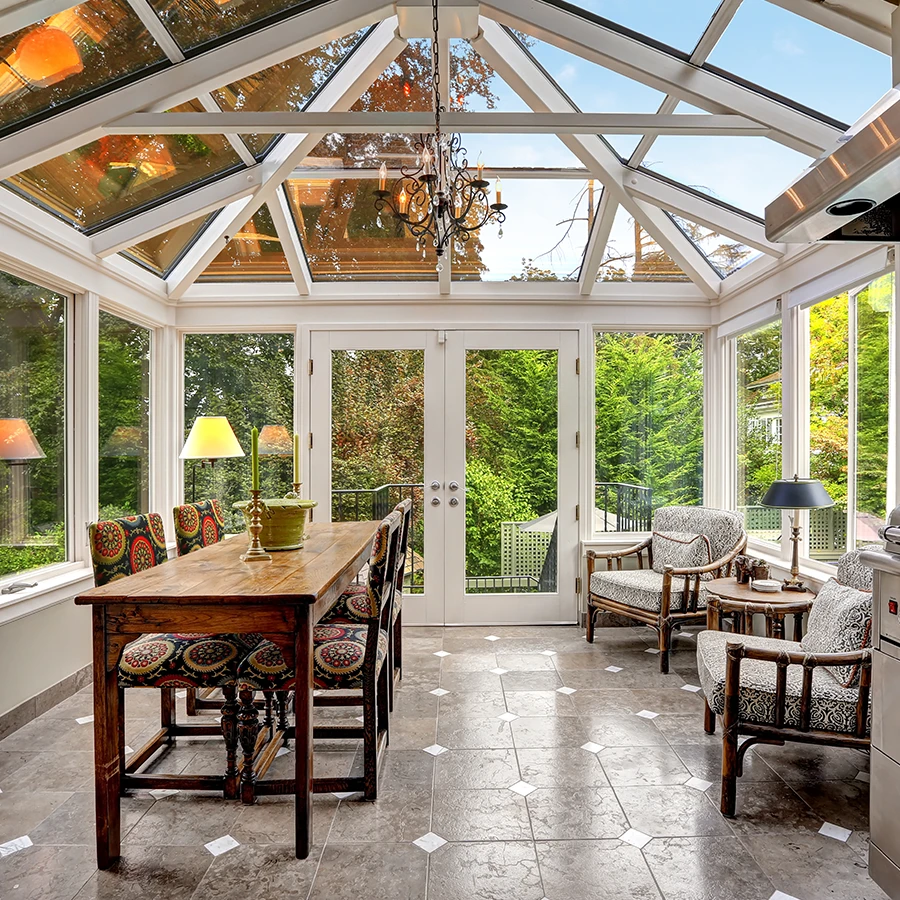
A conservatory is a glazed extension built mostly of windows and a glazed or solid roof, joined to your home and opening onto your garden. Done well, it’s not a room you only use in summer, it’s an everyday space that feels bright, warm and connected to the outdoors all year round.
This guide walks you through the choices that matter, the style, the frame material, the roof, the glazing and the practical bits like planning, so you can brief us with confidence and get a space that’s exactly right for your home.
Floods your home with light
Glazing on every side draws daylight deep into the house, lifting the mood of the rooms it adjoins.
Adds space without moving
A versatile extra room, dining, lounge, garden room, home office or playroom, for a fraction of the cost of relocating.
Connects you to the garden
Blur the line between inside and out, with wide views and doors that open onto the patio in the warmer months.
Adds value & kerb appeal
A well-designed, well-built conservatory is a genuine asset that buyers notice and value.
Choose Your Style
Six conservatory styles to suit every home
From period bays to modern glass boxes, the right shape depends on your home’s character, the space you have and how you’ll use the room. Explore the most popular styles below.
Best for period & traditional homes
Victorian Conservatory
The classic choice. A bay front with three or five facets, ornate ridge detailing and a pitched roof that gives a graceful, period feel.
Two decisions shape how your conservatory looks, feels and performs, the frame material and the roof. Here’s how the options compare.
Year-round comfort
Tiled / solid roof
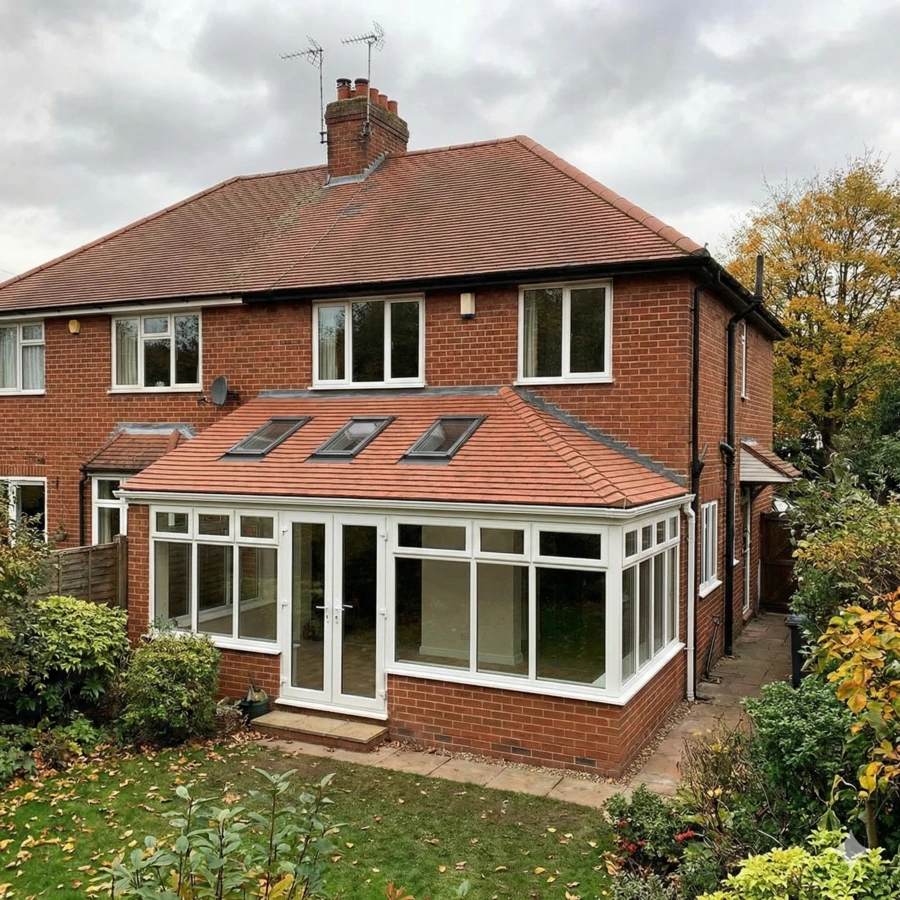
An insulated solid roof, optionally with glazed roof windows. Reads like a true extension and holds temperature superbly in winter and summer.
Excellent insulation, all seasons
Feels like a permanent room
Add roof windows for light
Maximum light
Glass roof
A fully glazed roof for the brightest possible space. Modern self-cleaning, solar-control glass keeps it comfortable and easy to maintain.
The most natural light
Solar-control & self-cleaning options
Slim, contemporary sightlines
Lightweight option
Polycarbonate roof
A lighter, traditional glazing option. We generally recommend glass or solid roofs for comfort, but polycarbonate still has its place on simpler builds.
Lightweight & economical
Quick to install
Best for occasional-use spaces
Slim & modern
Aluminium
Strong and slender. Aluminium frames carry larger panes of glass on thinner sightlines for a crisp, architectural, contemporary look.
Ultra-slim sightlines
Exceptionally strong & durable
Large glazed spans & bold colours
Most popular
uPVC
The default choice for good reason, low maintenance, energy efficient and available in a wide palette of colours and woodgrain finishes.
Virtually maintenance-free
Warm and energy efficient
Huge range of colours & finishes
CLASSIC & NATURAL
Timber
For homeowners who want the authentic look and feel of real wood, timber frames offer natural warmth, timeless character and traditional charm.
Genuine natural wood appearance
Ideal for traditional and period homes
Can be painted or stained in a range of finishes
Heritage look
Timber-effect
Want the warmth of wood without the upkeep? Woodgrain foils on uPVC or aluminium give an authentic timber appearance that lasts.
Authentic woodgrain finishes
Ideal for period homes
None of the maintenance of real timber
Conservatory or Orangery?
Two routes to the same dream room
They’re closely related, and the line between them blurs once you start adding solid roofs and brick. Watch our quick side-by-side, then explore which suits your home.
Conservatory
Mostly glazed walls and a glazed (or part-solid) roof. Lighter, brighter and typically faster and more affordable to build.
Orangery
Brick or stone piers with a flat perimeter roof and a central glazed lantern. More solid, more room-like, and beautifully substantial.
Most conservatories in England can be built under permitted development, and many are exempt from full building regulations, but only if they meet certain limits and conditions. Here’s the quick version.
Usually no permission needed if…
It is built to the side or rear of the house and stays within permitted-development limits
Extensions and outbuildings cover no more than 50% of the land around the original house
It stays within the relevant height, eaves and boundary limits
It remains thermally separated from the house, with compliant glazing, electrics and separately controlled heating
The new structure does not connect to an existing extension that was constructed under planning permission
Rules differ for flats, maisonettes, listed homes, designated land and properties where permitted-development rights have been restricted.
Worth checking first if…
Your home is listed, in a conservation area, or on other designated land
The conservatory would sit forward of the principal elevation or front a highway
It exceeds permitted-development size, depth, width or height limits
You want to remove the separating doors or open it fully into the house
If any apply, a quick conversation early saves time and surprises later.
We handle this for you. Our team checks planning and building regulations as part of your design and survey, and helps arrange any approvals needed, so you don’t have to.
Glazing & Year-Round Use
Comfortable in every season
The old reputation, freezing in January, baking in July, belongs to the past. Modern glazing and roofing make a conservatory just as usable in midwinter as midsummer.
A-rated, low-E glazing
Warm-edge, argon-filled double glazing with a low-emissivity coating keeps heat in during winter.
Solar-control glass
Reflects excess summer heat and glare so the room stays comfortable on the brightest days.
Insulated roof options
A solid or hybrid roof dramatically improves heat retention versus older polycarbonate.
Heating that suits the space
Underfloor heating or correctly sized radiators make it a genuine all-season room.
Ventilation & roof vents
Trickle vents and opening roof lights keep air fresh and prevent stuffiness in summer.
Self-cleaning glass
Rain does most of the work on the roof, so your space stays bright with less effort.
Your Journey With Us
From first idea to finished room
A clear, well-managed process with one expert team from start to finish, no juggling subcontractors, no surprises.
01
Free design consultation
We talk through how you want to use the space, take a look at your home and share ideas, no pressure, no obligation.
02
Survey & detailed quote
A precise on-site survey gives you an accurate, fully itemised quote with the style, materials and glazing agreed.
03
Choose your finishes
Lock in the style, frame colour, roof, glass, doors and hardware until the design is exactly right.
04
Approvals handled
We check planning and building regulations and arrange anything that’s required on your behalf.
05
Made to measure
Your conservatory is manufactured to precise specification, ready for a clean, efficient installation.
06
Installed & guaranteed
Our own FENSA-registered teams fit it with care, then back it with an insurance-backed guarantee and aftercare.
Common Questions
Conservatory questions, answered
Can I really use a conservatory all year round?
Yes. With modern A-rated glazing, solar-control glass and an insulated or solid roof, today’s conservatories hold their temperature far better than older builds. Add the right heating and it becomes a genuine everyday room in every season.
What’s the difference between a conservatory and an orangery?
A conservatory is mostly glazed, with a glazed or part-solid roof, so it feels light and airy. An orangery is usually built as a compliant structure requiring building control, has more brickwork and a flat perimeter roof with a central glazed lantern, so it feels more like a permanent extension. Many designs sit somewhere in between.
Will I need planning permission?
Most conservatories are built under permitted development and don’t need planning permission, provided they stay within set size and height limits. Listed buildings, conservation areas and front-of-house builds are the usual exceptions. We check this for you as part of the design and survey.
uPVC, aluminium or timber frames — which is best?
All three are excellent options, and the best choice depends on the look, budget and style of your home. uPVC is the most popular choice: warm, low-maintenance, great value and available in a wide range of colours and woodgrain finishes. Aluminium is strong and slim, allowing for larger panes of glass and a sleek, contemporary appearance. Timber offers a beautiful, traditional finish with natural character, making it ideal for period properties or homeowners looking for a more classic style. We’ll help you compare the options and choose the right frame material for your home.
Glass roof or solid roof?
A glass roof gives the most light and that classic conservatory feel. A solid or tiled roof requires a building control application but maximises insulation and makes the room feel like a true extension, you can still add roof windows for light. It comes down to how bright versus how cosy you want the space to be.
How much maintenance is involved?
Very little. uPVC and aluminium frames only need an occasional wipe, self-cleaning glass keeps the roof clear, and there’s no painting or treating like timber. A quick check of seals and drainage now and then is all that’s really needed.
Is the work guaranteed?
Yes. Your conservatory installation is covered by a 20-year warranty, with aftercare from the same team that designed and fitted it.