

What is an Orangery Building?
In the world of home extensions, few structures evoke the same sense of history, architectural style, and practical luxury as the orangery. If you’ve ever admired a grand home with a stunning, semi-glazed extension and found yourself wondering, “What is an orangery?”, you are in the right place. This comprehensive guide will answer that question, delve into its history, explain its modern forms, and help you understand precisely what makes it one of the UK’s most sought-after extensions.
To understand a modern orangery extension on a suburban house, it helps to first understand what the original orangery building was and how its purpose has evolved.
Defining the Orangery Extension
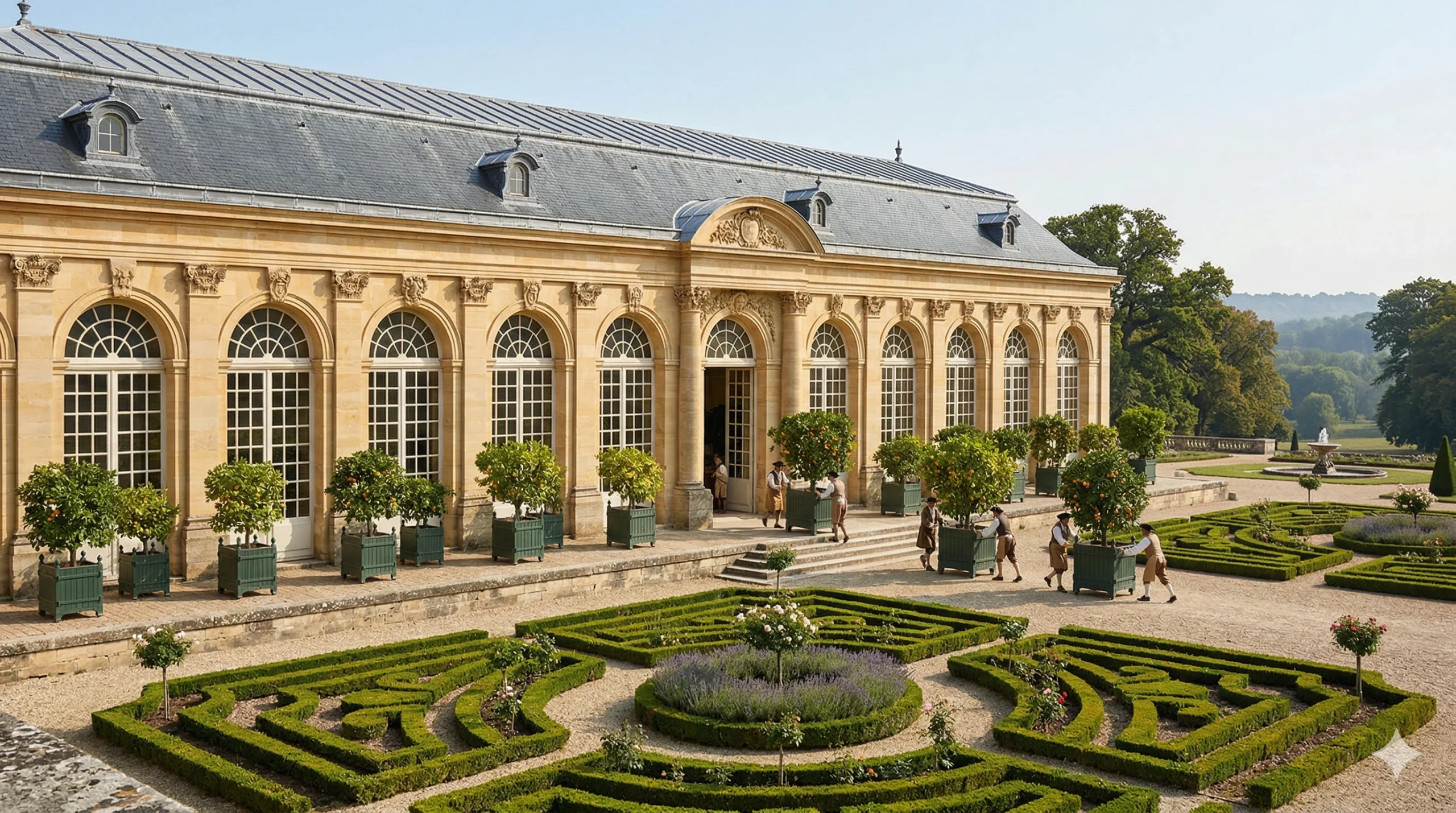
At its simplest historical definition, an orangery was a form of dedicated, grand greenhouse. Emerging in the 17th century among the wealthy elite across Europe (and especially in the UK), an orangery was specifically designed to house and cultivate prized, non-hardy, and non-native citrus trees (like orange and lemon trees) during the harsh winter months.
These early structures were symbols of significant wealth and prestige. Unlike a modern glass conservatory, a historical orangery was not fully glazed. To provide sufficient warmth while still allowing precious light, they were constructed with:
- Solid Brick or Stone Walls to the north and sides to retain heat.
- Large, South-Facing Windows with minimal timber framing to maximise sun exposure.
- Solid Roofs, often tiled or leaded, which were often opaque, perhaps with some glazed sections, but not the fully glazed roofs seen today.
What is an Orangery Used For?
This brings us to one of the most practical questions: What is an orangery used for? Historically, its use was single-purpose: protect exotic plants. However, as heating technology improved and glass became less expensive, the primary function of these structures shifted from purely botanical to beautifully architectural.
Today, a modern orangery extension or orangery building is used for almost any living space that benefits from being flooded with natural light. The solid structure provides a permanent, energy-efficient addition to your home.
The most common modern uses for an orangery room include:
- A Bright and Airy Dining Room: Perhaps the classic modern use, creating a ‘dining in the garden’ experience, perfect for entertaining.
- An Open-Plan Kitchen Extension: Integrating the kitchen into a spacious, light-filled environment, transforming it into the heart of the home.
- A Luxurious Living or Family Room: A comfortable space for relaxation, less susceptible to the extreme temperature changes of a traditional conservatory.
- A Productive Home Office: Providing a bright, inspiring place to work, especially valuable with the rise of remote working.
- A Dedicated Lounge or Reading Nook: A quiet space to enjoy garden views year-round.
What is the Difference Between a Conservatory and an Orangery?
This is the number one question on the topic, and the source of most confusion: What is the difference between a conservatory and an orangery?
While both are essentially sunrooms designed to bring the outside in, the distinction lies in their architecture, construction, and, most importantly, how you intend to use the space.
Architectural Differences
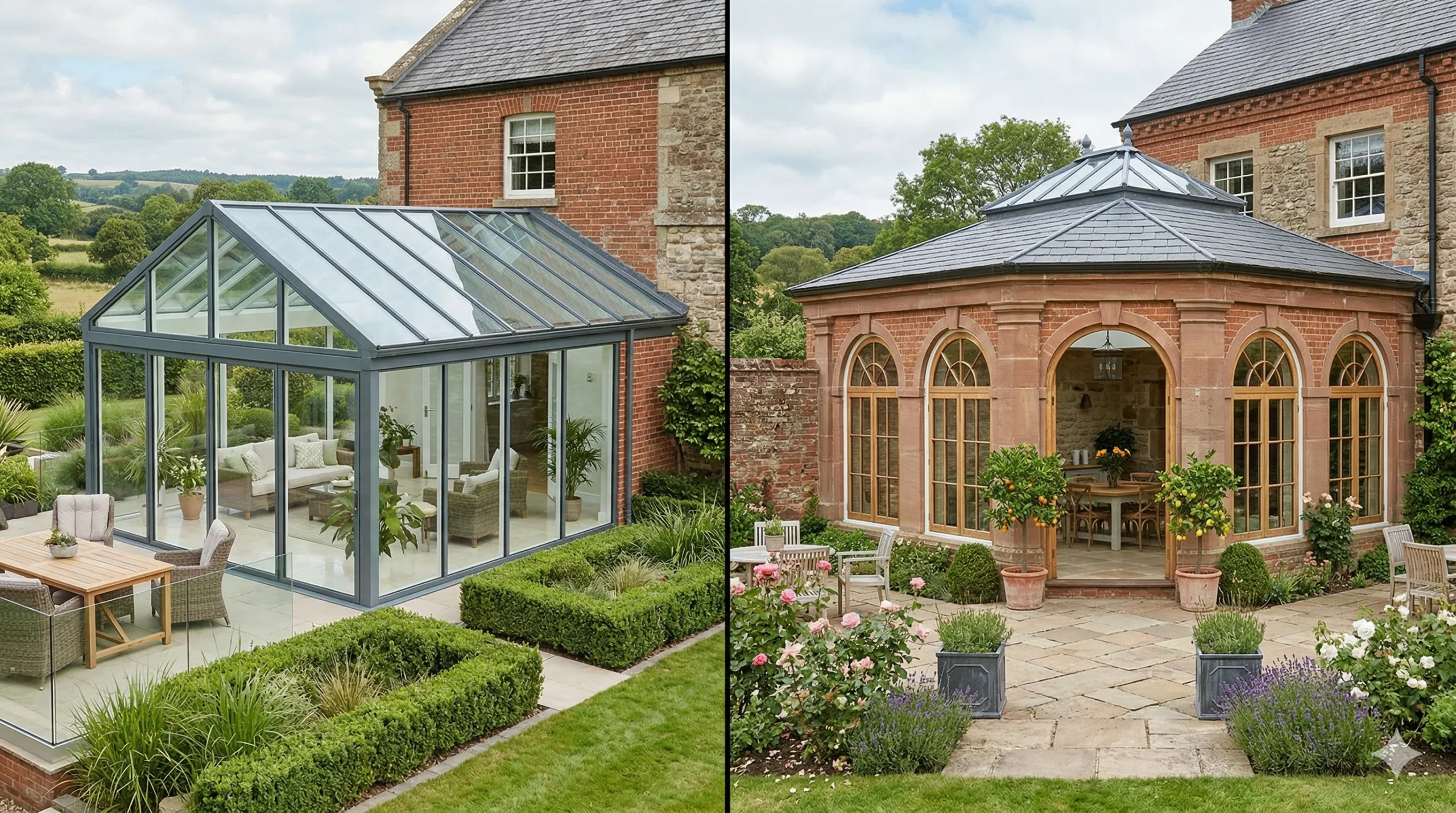
The primary difference between an orangery and a conservatory lies in the ratio of glazing to solid structure.
Brickwork & Columns
- Orangery: Features significant solid brick or stone pillars and columns. This gives the building a feeling of permanence, aligning it architecturally with the existing home. A modern orangery typically has a high proportion of brickwork to glass (perhaps 50-70% solid structure to glass).
- Conservatory: Is characterised by a high proportion of glass. Traditional uPVC or timber frames sit on low ‘dwarf walls,’ creating a structure that is primarily glazed (80-90% glass).
Roof Structure
- Orangery: A hallmark of the modern orangery extension is its perimeter roof. The solid walls are topped by a substantial perimeter of flat roof structure. In the centre of this flat perimeter sits a roof lantern, a raised, multi-faceted glass structure that floods the room with light from above.
- Conservatory: The entire roof is glazed. Traditional conservatories have completely glazed, pitch or lean-to roofs. More modern conservatories may have a solid perimeter internal soffit to feel like an orangery, but the core distinction of the physical perimeter flat roof with a separate lantern remains.
Temperature Control and Usability
This is where the distinction becomes crucial for practical use.
- Orangery: Thanks to its solid brick columns and insulated perimeter roof structure, a modern orangery is far more energy-efficient than a conservatory. It can be easily integrated into your home’s central heating, making it a truly ‘four-season room.’ It remains warmer in winter and cooler in summer, making it ideal as a permanent kitchen, dining, or living room.
- Conservatory: The high proportion of glass creates what’s known as the ‘glass house effect.’ It can be extremely hot in the direct sun of summer and challenging and expensive to heat in winter. This makes it more of a ‘three-season room,’ less suitable for permanent uses like a kitchen or home office unless significant investment is made in specialist glass and climate control.
When deciding what is better: an orangery or a conservatory, the answer always comes down to use. If you want a comfortable, energy-efficient, and permanent extension to your living space, an orangery is the superior choice. If you want a dedicated ‘sunroom’ for a botanical collection and seasonal enjoyment, a conservatory may suffice.
Understanding the Orangery UK Market
The demand for orangeries in the UK has exploded in recent years, driven by a desire for year-round living space that adds both value and character.
Evolution of the modern UK Orangery Extension
The orangery in the UK has undergone a fascinating evolution. After its 17th-century peak, it fell somewhat out of fashion. Its modern resurgence can be attributed to several factors:
- Improvements in Heating and Glazing: The availability of high-performance glass (like low-emissivity glass) and improved underfloor heating means these semi-glazed structures can now be seamlessly integrated into a home’s central heating and remain comfortable all year, overcoming the key issue of traditional sunrooms.
- A Desire for Open-Plan Living: The modern desire to combine kitchens, dining, and family spaces into one large, bright, multi-functional room perfectly matches the capabilities of an orangery extension.
- Appreciation for Architectural Permanence: UK homeowners appreciate that an orangery looks like a permanent building, unlike some conservatories which can appear like temporary additions.
Do you need planning permission for an orangery?
A common concern when considering an extension is Planning Permission and Building Regulations.
An orangery extension typically falls under the same rules as any other ground-floor extension. Depending on its size, height, and proximity to boundaries, it may be possible to build under Permitted Development (PD) rights, which means explicit planning permission isn’t required.
However, many factors can affect this, including if your home is a listed building, is in a conservation area, or if you have already extended. Building Regulations are almost always required to ensure the structure is safe, secure, and energy-efficient.
